








































How to Tell a Cat’s Age Easily: Simple Signs Every Owner Should Know
Have you recently adopted a rescue cat or found a stray and wondered how old it might be? Unlike humans, cats can’t tell us their age, but their bodies provide many useful clues. By observing their teeth, eyes, coat, body condition, and behavior, you can make a fairly accurate estimate of your feline friend’s age.
Here are some simple signs every cat owner should know.
1. Check the Teeth
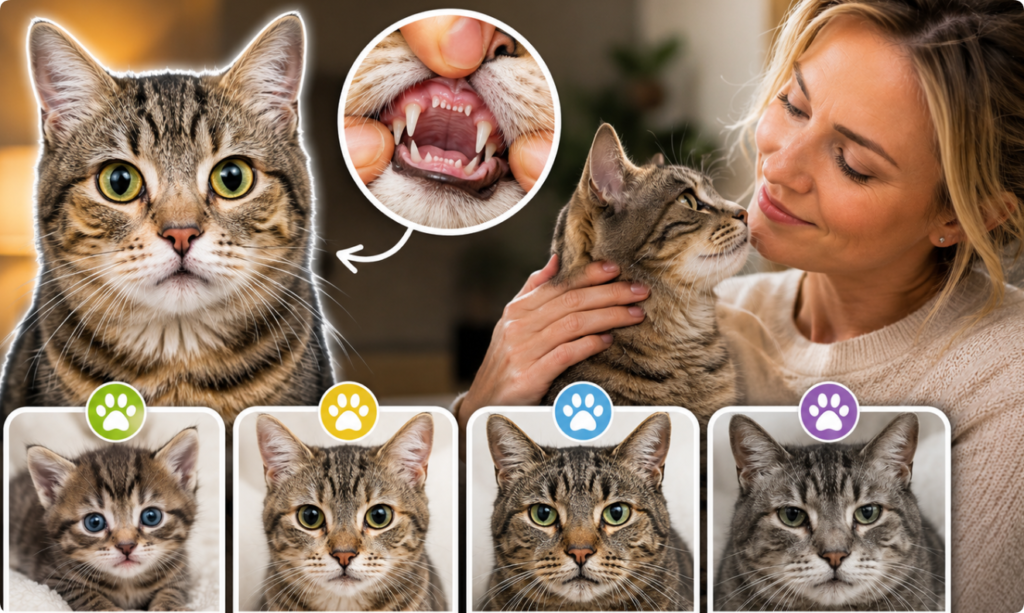
A cat’s teeth are one of the best indicators of age.
- Kittens (under 6 months): Baby teeth are replaced by permanent teeth, which appear bright white and clean.
- Young adults (1–2 years): Teeth remain white with very little tartar buildup.
- Adults (3–6 years): Yellowing and mild tartar begin to appear, especially on the back teeth.
- Senior cats (7+ years): Significant tartar, worn teeth, and even missing teeth become more common.
While dental care affects appearance, teeth usually provide the most reliable estimate.
2. Look at the Eyes
Healthy young cats typically have bright, clear eyes without cloudiness. As cats age, the lenses may develop a slight haze, and tear production may change.
Older cats are also more likely to experience vision problems or develop cataracts and other age-related eye conditions.
3. Feel the Body and Muscles
Young cats are usually lean, muscular, and energetic. As they enter middle age, some gain weight due to lower activity levels.
Senior cats often lose muscle mass, especially around the shoulders and back legs, making their bones more noticeable even if their weight remains stable.
4. Observe the Coat
A kitten’s fur is generally soft and fluffy, while adult cats develop a smoother, denser coat.
Senior cats may have a rougher texture, thinner fur, or even patches of gray hairs, particularly around the face and ears. Reduced grooming ability due to arthritis or dental pain can also make the coat appear dull or matted.
5. Watch Their Activity Level
Age often affects a cat’s behavior. Kittens are constantly exploring, climbing, and playing. Adult cats enjoy play but are usually calmer.
Senior cats spend more time sleeping and may hesitate before jumping onto furniture or climbing stairs. They often prefer quiet routines and comfortable resting places.
6. Notice Behavioral Changes
Older cats may become more affectionate, seek human companionship, or become less interested in active play. Some may vocalize more frequently or appear confused due to age-related cognitive changes.
These subtle behavioral differences can provide additional clues about a cat’s stage of life.
Why Knowing Your Cat’s Age Matters
Understanding your cat’s approximate age helps you choose the right nutrition, exercise routine, and veterinary care. Kittens need food that supports growth, adults require balanced maintenance diets, and senior cats benefit from nutrition designed to support joints, kidneys, and overall health.
Regular veterinary checkups become increasingly important as cats grow older.
Conclusion
Although it’s impossible to determine a cat’s exact age without records, examining the teeth, eyes, coat, body condition, and daily behavior can provide a reliable estimate. These simple observations allow owners to better understand their feline companion’s needs and provide age-appropriate care.
No matter how old your cat is, proper nutrition, regular health checks, and plenty of love will help them enjoy a long, happy, and healthy life.
Related posts:
 When Is a Cat Considered a Senior? Complete Age Guide
 How Aging Affects a Cat’s Body, Mind and Mood & Simple Ways to Support Them
 Signs Your Cat Is Becoming a Senior ,You Might Be Missing!
 How Long Do Senior Cats Live? Realistic Lifespan Guide 2026
 When Is a Cat Considered Senior? Cat Age and Aging Explained
 6 Key Signs Your Senior Cat Is Nearing the End of Life
 Best Cat Breeds for First-Time Owners: Friendly, Easy-Care Cats for Beginners
 How to Introduce Two Cats Successfully Without Stress, Fighting, or Fear
 Why Is My Cat Throwing Up? Common Causes and When You Should Worry
 6 Surprising Reasons Senior Cats Start Peeing Outside the Litter Box and How to Fix It