




































Why Is My Cat Throwing Up? Common Causes and When You Should Worry
Seeing your cat vomit can be alarming, especially if it happens more than once. While occasional vomiting is fairly common in cats, frequent or severe episodes may signal an underlying health problem. Understanding the possible causes can help you decide whether your cat simply needs monitoring or immediate veterinary care.
1. Hairballs
Hairballs are one of the most common reasons cats throw up. As cats groom themselves, they swallow loose fur that may collect in the stomach. Most hairballs are harmless, but frequent vomiting of hairballs may indicate excessive grooming or digestive issues.
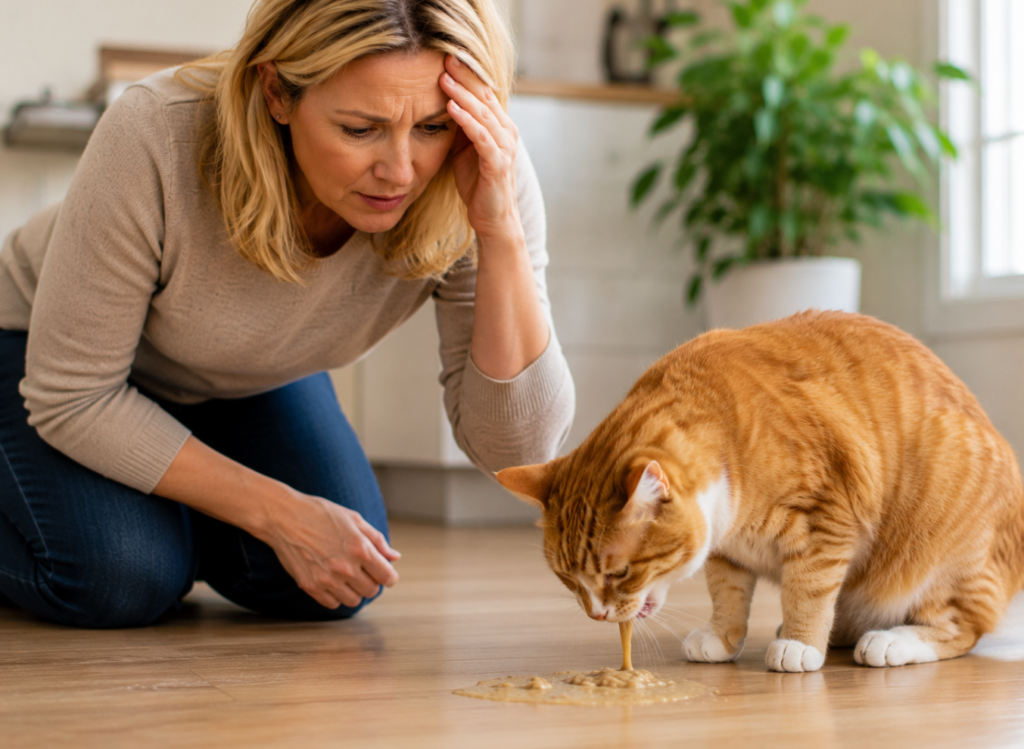
Regular brushing and a high-fiber diet can help reduce hairball formation.
2. Eating Too Fast
Some cats eat so quickly that they regurgitate their food shortly afterward. This usually happens within minutes of eating and is often undigested food rather than true vomiting.
Using slow-feeding bowls or offering smaller meals throughout the day can solve this problem.
3. Sudden Diet Changes
Changing your cat’s food too quickly can upset the digestive system, leading to vomiting and diarrhea. New foods should always be introduced gradually over seven to ten days to allow the stomach to adjust.
4. Food Intolerance or Allergies
Certain ingredients may not agree with your cat’s digestive system. If vomiting occurs repeatedly after eating a specific food, your veterinarian may recommend a limited-ingredient or hypoallergenic diet.
5. Stomach Irritation or Illness
Gastrointestinal infections, parasites, inflammatory bowel disease, kidney disease, diabetes, and liver problems can all cause vomiting. Senior cats are especially at risk for these age-related conditions.
Additional symptoms such as weight loss, poor appetite, or lethargy should never be ignored.
6. Swallowing Foreign Objects
Cats are naturally curious and may swallow string, ribbon, plastic, or small toys. These objects can block the digestive tract and become life-threatening.
If your cat repeatedly vomits, strains without producing vomit, or appears to be in pain, seek veterinary care immediately.
When Should You Worry?
An isolated vomiting episode in an otherwise healthy cat is usually not an emergency. However, you should contact your veterinarian if your cat:
- Vomits multiple times in one day
- Refuses food for more than 24 hours
- Has blood in the vomit
- Appears weak or dehydrated
- Experiences diarrhea along with vomiting
- Shows sudden weight loss or unusual behavior
Early diagnosis often leads to better treatment outcomes.
Conclusion
Occasional vomiting may be caused by hairballs or eating too quickly, but persistent or severe vomiting should never be dismissed as normal. Careful observation, proper nutrition, and routine veterinary care play a key role in keeping your cat healthy.
By recognizing the common causes and knowing the warning signs, you can take the right steps to protect your feline companion and ensure they enjoy a long, comfortable, and happy life.
Related posts:
 When Is a Cat Considered a Senior? Complete Age Guide
 Why Senior Cats Stop Playing and How to Encourage Them
 How Aging Affects a Cat’s Body, Mind and Mood & Simple Ways to Support Them
 Signs Your Cat Is Becoming a Senior ,You Might Be Missing!
 How Long Do Senior Cats Live? Realistic Lifespan Guide 2026
 When Is a Cat Considered Senior? Cat Age and Aging Explained
 Why Is My Senior Cat Constipated? Common Causes and Solutions Explained
 6 Key Signs Your Senior Cat Is Nearing the End of Life
 Best Cat Breeds for First-Time Owners: Friendly, Easy-Care Cats for Beginners
 How to Introduce Two Cats Successfully Without Stress, Fighting, or Fear