














Low-Intensity Interactive Games for Senior Cats: Fun & Gentle Ways to Keep Them Engaged
As cats enter their senior years (11 years and older), their energy levels decline, joints may stiffen, and senses may dull—but that doesn’t mean they no longer enjoy play. Interactive play is still vital for senior cats: it supports gentle physical activity, stimulates their minds, strengthens your bond, and helps prevent boredom and cognitive decline. The key is to choose low-intensity games that accommodate their physical limitations, avoid strain, and prioritize comfort and fun. Unlike high-energy play for kittens or young cats, senior cat games should be slow, gentle, and adaptable to their abilities. This article shares the best low-intensity interactive games for senior cats, along with tips to make playtime enjoyable and safe for your aging feline companion.
When selecting games for senior cats, always keep their needs in mind: avoid jumping, running, or sudden movements that could strain arthritic joints. Focus on games that involve slow movement, gentle pawing, or mental stimulation, and keep sessions short (5–10 minutes, 2–3 times a day) to prevent fatigue. All games should be stress-free—never force your cat to play, and stop if they show signs of discomfort, such as limping, hissing, or withdrawing.
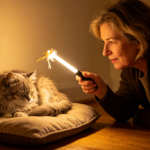
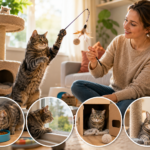
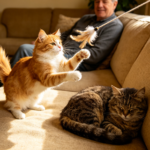
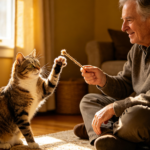
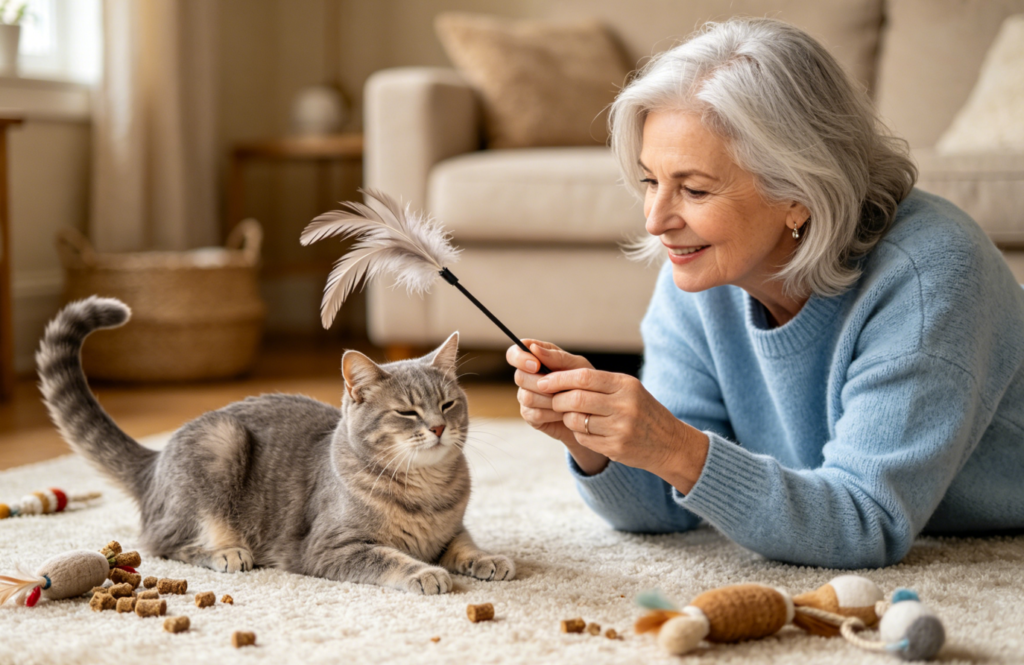
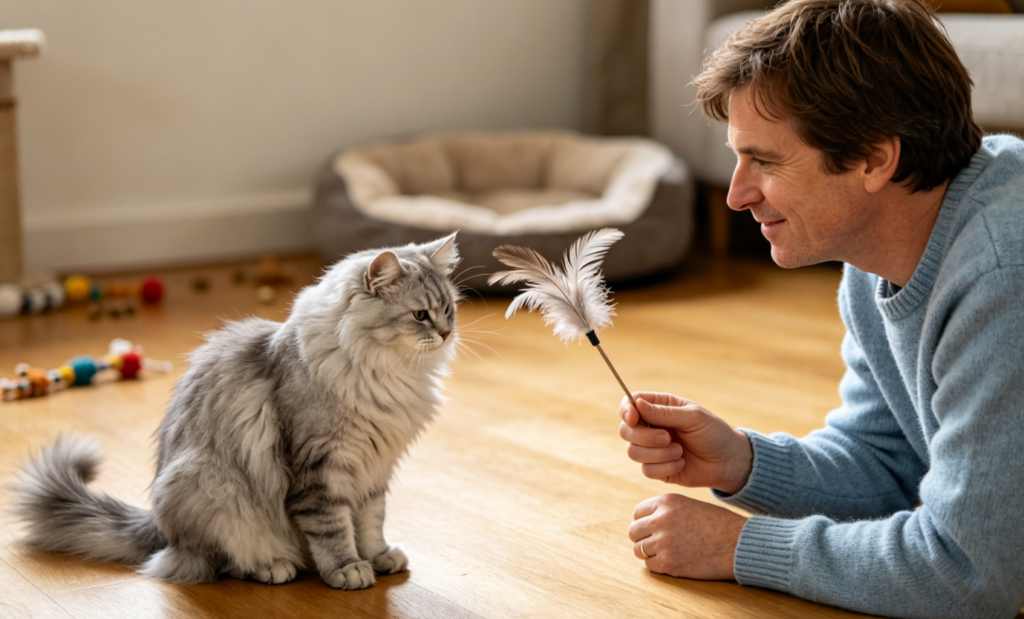
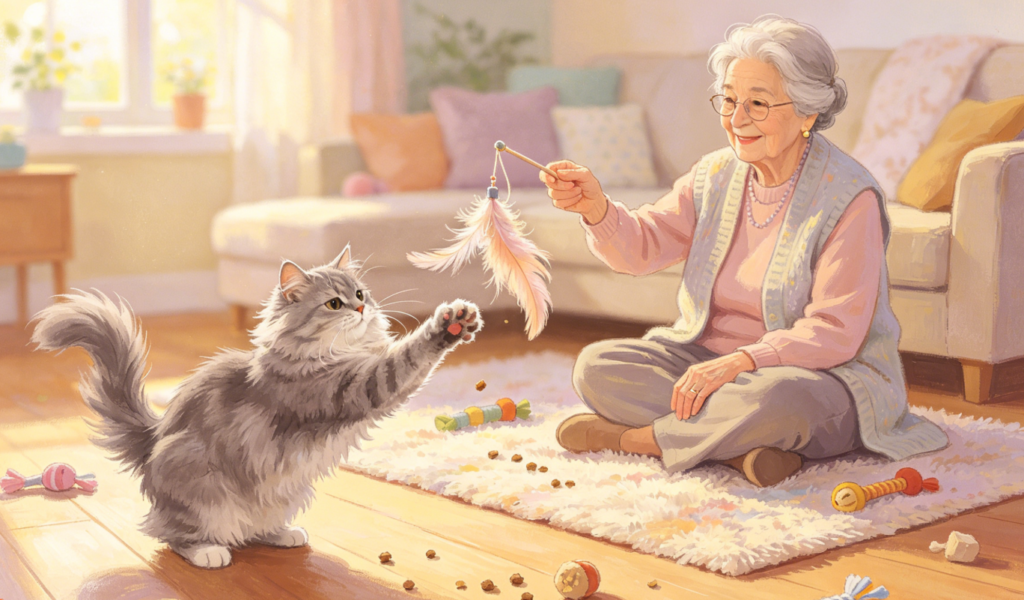
One of the best low-intensity games for senior cats is slow-moving wand play. Swap out high-energy feather wands for soft, lightweight options with fabric or plush attachments (avoid hard plastic or sharp edges). Hold the wand close to the ground and move it slowly—drag it along the floor, wiggle it gently, or pause occasionally to let your cat bat at it. This mimics the movement of slow prey (like a mouse or bug) and allows your cat to pounce without jumping or straining. Reward them with a small, digestible treat when they engage, creating positive associations with playtime. For cats with vision loss, choose wands with soft bells or scented attachments (like catnip or silver vine) to help them track the toy.
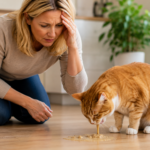
Another gentle game is treat hunt. This game stimulates your cat’s sense of smell and mental acuity without requiring much physical effort. Hide small, soft treats around a quiet room—under a soft blanket, near their bed, or on a low, stable surface (avoid high shelves or tight spaces). Start with easy hiding spots so your cat can find the treats quickly, boosting their confidence. As they get more comfortable, you can make the hiding spots slightly trickier, but always keep them accessible. This game is especially great for cats with mobility issues, as they can move at their own pace and rest whenever they need to.
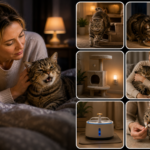
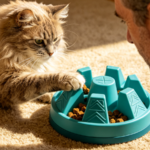
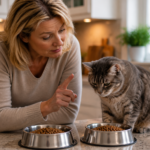
Puzzle feeders and treat-dispensing toys are perfect for mental stimulation with minimal physical activity. Choose simple, easy-to-use puzzles that don’t require heavy pawing or complex movements—look for options with large openings or gentle mechanisms that your senior cat can manipulate with their paws or nose. These toys keep their minds active, prevent boredom, and turn mealtime into a fun, engaging activity. You can even use puzzle feeders for their regular meals to add mental stimulation to their daily routine.
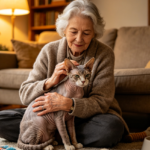
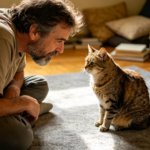
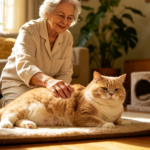
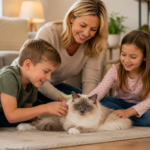
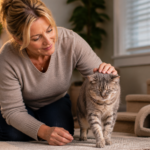
For cats who enjoy gentle cuddles and interaction, hand pat play is a great choice. Sit or kneel at your cat’s level and use your hand to gently pat the floor near them, or wiggle your fingers slowly in front of their paws. Most senior cats will respond by gently batting at your hand (keep your nails trimmed to avoid scratches). This game is low-effort, strengthens your bond, and allows your cat to engage without moving too much. Always let your cat set the pace—if they want to stop, pull your hand away and give them space.
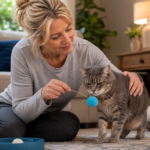
A soft ball roll is another simple, low-intensity game. Use a lightweight, soft ball (avoid hard rubber or heavy toys) and roll it slowly across the floor toward your cat. They can bat at it with their paw, chase it a short distance, or simply watch it—all without straining their joints. You can even roll the ball back and forth between you and your cat for a gentle, interactive experience. For cats with limited mobility, roll the ball close to them so they don’t have to move far to engage.
Scent exploration is a low-effort game that taps into your cat’s natural curiosity. Place a few scented items (like catnip, silver vine, or a piece of clothing with your scent) around a quiet room and let your cat sniff and explore at their own pace. This game requires no physical exertion but provides mental stimulation and comfort, especially for cats with sensory decline. You can rotate the scented items regularly to keep the game interesting.
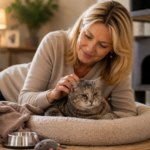
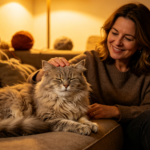
When playing with your senior cat, always prioritize their comfort. Provide a soft, warm surface for them to rest on during play sessions, and keep the area quiet and free of distractions. Avoid playing in cold or drafty areas, as senior cats are more sensitive to temperature changes. If your cat has arthritis or joint pain, consult your vet before starting any new play routine—they may recommend gentle stretches or joint supplements to make play more comfortable.
In conclusion, low-intensity interactive games are a wonderful way to keep senior cats engaged, healthy, and happy. By choosing gentle, adaptable games that accommodate their physical limitations, you can provide mental stimulation, gentle exercise, and quality bonding time. Remember, playtime for senior cats is not about intensity—it’s about joy, connection, and supporting their overall well-being. With these simple games, you can help your senior cat maintain their quality of life and enjoy their golden years to the fullest.