











How Much Water Should a Senior Cat Drink Daily and How to Encourage More Water Intake
Proper hydration is critical for senior cats (11 years and older), as their bodies become more prone to dehydration, kidney disease, and urinary tract issues with age. Unlike younger cats, senior cats may have reduced thirst drives, mobility challenges, or underlying health conditions that make it harder for them to drink enough water. For cat owners, knowing how much water a senior cat should drink daily and learning simple ways to encourage more water intake is key to supporting their long-term health and preventing life-threatening complications. This guide breaks down the ideal daily water intake for senior cats, factors that affect their hydration, and actionable tips to keep them well-hydrated.
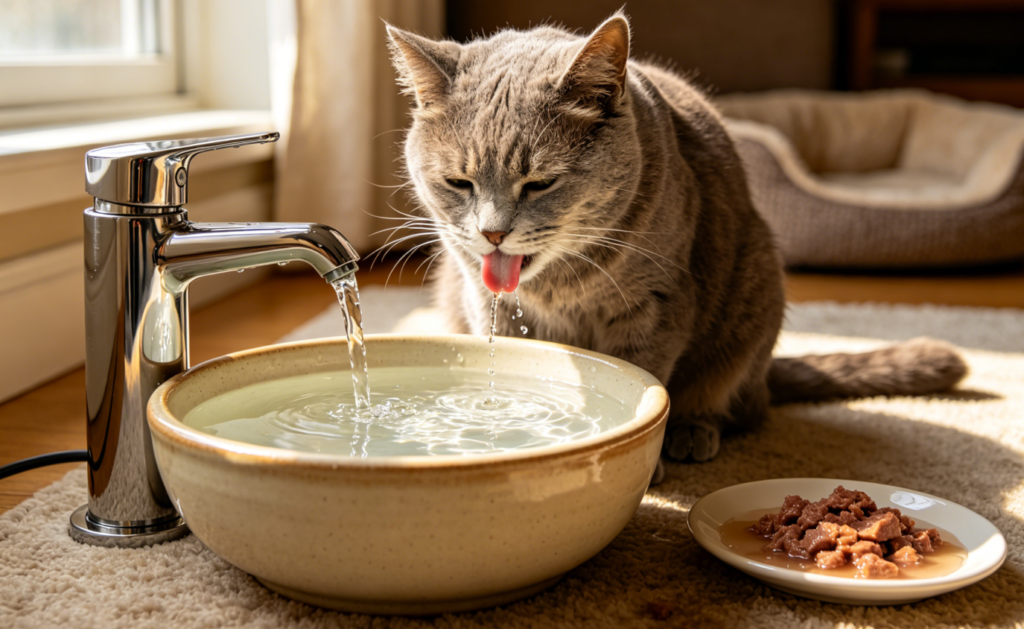
First, let’s answer the core question: how much water should a senior cat drink daily? The general guideline is 1–2 ounces of water per pound of body weight each day. For example, a 10-pound senior cat should drink 10–20 ounces of water daily. This includes water from their water bowl, as well as moisture from wet food (since wet food is typically 70–80% water). It’s important to note that this is a minimum recommendation—senior cats with health conditions like kidney disease, diabetes, or hyperthyroidism may need more water, and your vet may adjust this amount based on their individual needs.
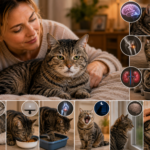
Dehydration is a serious risk for senior cats, as it can worsen existing health issues and lead to organ damage. Signs of dehydration to watch for include dry gums, lethargy, reduced urination, dark yellow urine, and skin that doesn’t spring back when gently pulled. If you notice any of these signs, contact your vet immediately, as dehydration can quickly become life-threatening.
Several factors can affect a senior cat’s water intake. Mobility issues, such as arthritis, may make it hard for them to reach their water bowl, especially if it’s placed on a high surface. A reduced sense of smell or taste (common in senior cats) can decrease their interest in water, while underlying health conditions may increase their thirst or make drinking more difficult. Additionally, environmental factors—like dry air from heaters or air conditioners—can cause them to lose more moisture, increasing their water needs.
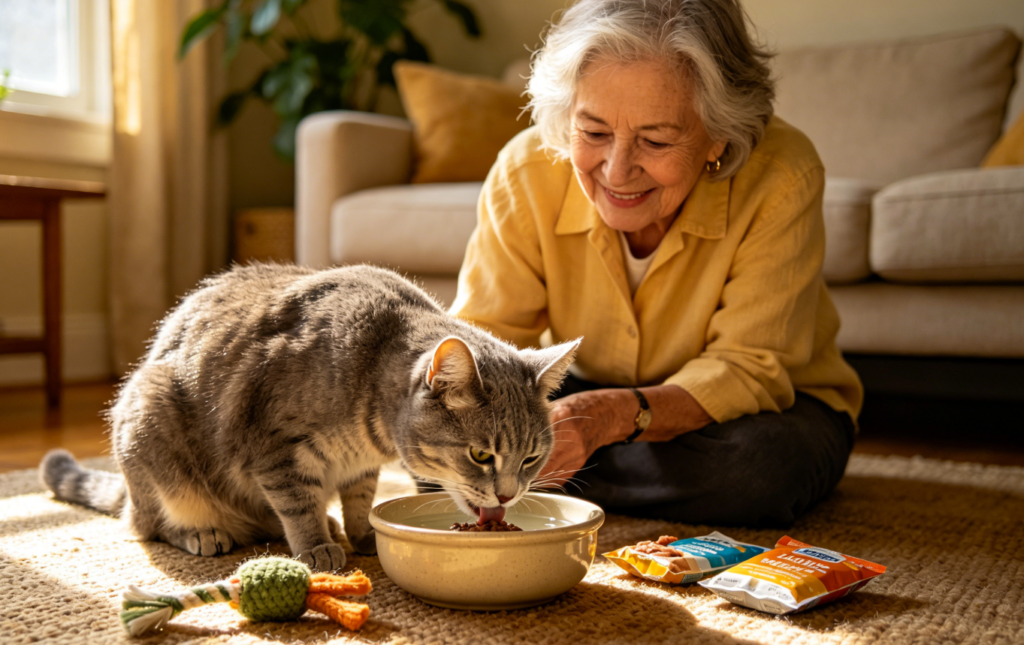
Now, let’s explore simple, effective ways to encourage your senior cat to drink more water. The goal is to make water easily accessible, appealing, and stress-free for them.
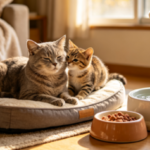
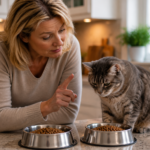
- Provide Multiple Water Bowls – Place 2–3 water bowls in different, easily accessible areas of your home. Choose shallow, wide bowls that are easy for senior cats to reach (avoid deep bowls that require them to strain their necks). For cats with mobility issues, place bowls on the ground or a low, stable surface to avoid jumping.
- Use Fresh, Clean Water – Senior cats are often picky about water quality. Change their water at least twice a day, and clean the bowls regularly to remove bacteria or residue. Some cats prefer running water, so a cat water fountain can be a great investment—it keeps water fresh, oxygenated, and appealing, encouraging them to drink more.
- Incorporate Wet Food into Their Diet – Wet food is an excellent way to increase your senior cat’s water intake. If your cat currently eats dry food, try mixing in a small amount of wet food (or adding water to dry food to make a gravy) to boost their moisture intake. This not only helps with hydration but also supports their digestive health, which is often more sensitive in senior cats.
- Make Water More Appealing – Some senior cats may be enticed by flavored water. Add a small amount of low-sodium chicken or tuna broth (without onions or garlic, which are toxic to cats) to their water bowl to make it more enticing. Avoid adding sugar or artificial flavors, as these can be harmful.
- Adjust the Water Temperature – Many cats prefer room-temperature or slightly warm water over cold water, especially in colder months. Avoid giving them extremely cold water, as it can be unappealing and may upset their sensitive stomachs.
- Monitor Their Water Intake – Keep track of how much water your senior cat drinks each day. This helps you notice changes early—if they suddenly drink significantly more or less than usual, it may signal an underlying health issue (like kidney disease or diabetes) that requires a vet visit.
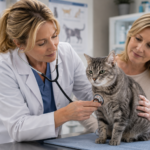
It’s also important to consult your vet about your senior cat’s water intake, especially if they have underlying health conditions. Your vet can recommend a personalized water intake goal and provide additional tips to encourage hydration based on your cat’s specific needs.
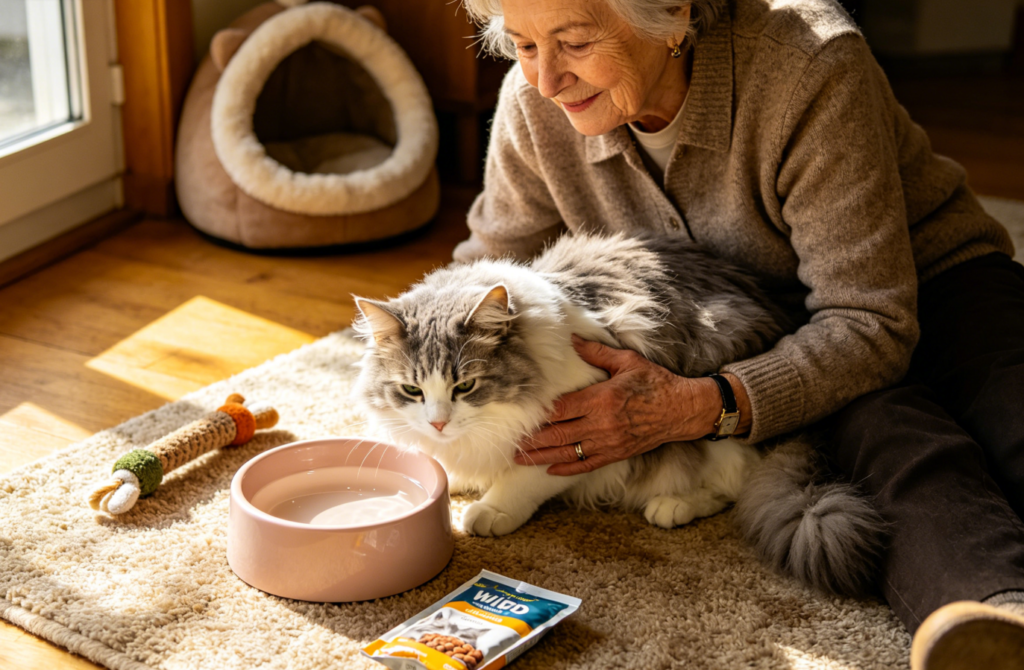
In conclusion, proper hydration is essential for senior cats’ health, and knowing their daily water needs is the first step to keeping them healthy. By providing accessible, fresh water, incorporating wet food, and using simple tricks to make water more appealing, you can encourage your senior cat to drink enough water. Remember, small changes can make a big difference in their hydration and overall well-being, helping them thrive in their golden years.
Related posts:
 Best Food for Senior Cats: Wet vs Dry Food Guide
 Senior Cat Diet: What to Feed and What to Avoid Every Cat Owner Needs to Know
 Best Treats for Senior Cats With Sensitive Stomachs to Prevent Upset Digestion
 The Ultimate Diet Plan for Senior Cats: Tailored Nutrition for Every Age Stage (11+ Years)
 What Senior Cats Should Eat and Avoid Completely: The Ultimate Guide to Safe Nutrition for Aging Cats
 Best Senior Cat Food 2026: What Every Owner Should Buy